

How to Straighten and Prevent Deformation in Aluminum Profile Extruder Production?
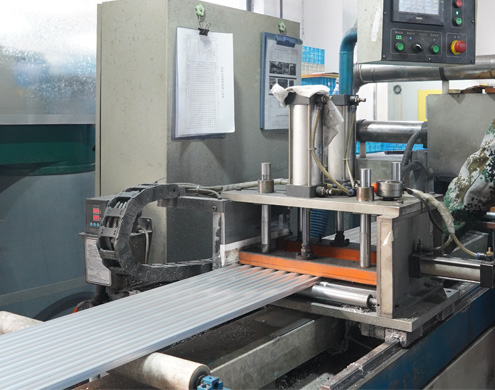
In modern aluminum profile production lines, extrusion is merely the first step; the true challenge begins when the glowing hot aluminum exits the extruder. Improper handling during cooling and straightening can lead to warping, twisting, and internal stresses that compromise the structural integrity of aluminum profiles. Recent technological advances are fundamentally changing how aluminum profile's manufacturers address these issues.
Advanced Straightening Technologies
Modern aluminum profile production employs several sophisticated straightening technologies:
· In-line Stretcher Straightening Systems: These systems apply controlled tensile force immediately after extrusion while the aluminum profile retains some plasticity, effectively eliminating internal stresses before they become permanent deformations.
· Multi-Roll Straightening Machines: Utilizing precisely calibrated roller systems, these machines apply progressive pressure to gradually correct curvature along the entire length of the aluminum profile as it moves through the production line.
· Rotary Straightening for Complex Profiles: Specially designed for intricate aluminum profile geometries, these systems combine rotation with pressure application to address multi-dimensional deformation issues.
Prevention Through Process Optimization
Leading manufacturers now recognize that preventing deformation begins long before straightening:
· Extruder Die Design Optimization: Advanced simulation software predicts material flow patterns, allowing engineers to design extruder dies that distribute aluminum more evenly, reducing inherent stresses as the profile forms.
· Precision Cooling Systems: Sophisticated cooling chambers with zone-controlled temperature regulation ensure gradual, uniform cooling of aluminum profiles exiting the extruder, minimizing thermal shock and stress formation.
· Real-Time Monitoring Integration: Sensors embedded throughout the extruder and cooling sections continuously monitor temperature, pressure, and speed parameters, allowing for immediate adjustments to maintain optimal conditions.
The evolution from corrective straightening to preventative deformation control marks a significant advancement in aluminum profile production. As extruder technologies continue to develop alongside smarter straightening solutions, manufacturers gain unprecedented control over aluminum profile product quality while optimizing their production efficiency and material utilization.