


Evolution and Innovation in Heat Sink Technology
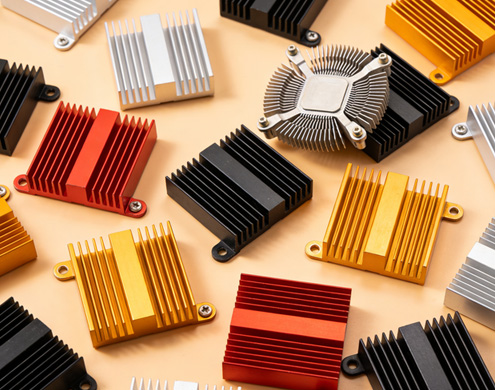
To meet modern demands, heat sink technology has evolved far beyond simple metal extrusions.
· Advanced Manufacturing: Additive manufacturing (3D printing) is revolutionizing design. It allows for complex, topology-optimized structures like internal microchannels and lattice geometries that are impossible to make traditionally. These designs can be lighter and offer superior thermal performance.
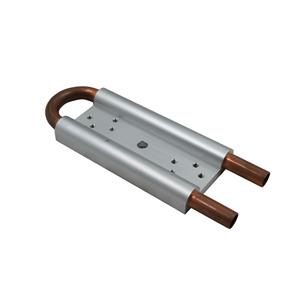
· Hybrid & Two-Phase Systems: For extreme heat loads, engineers combine heat sinks with phase-change technologies. Heat pipes and vapor chambers are integrated into the heat sink base. They use an internal working fluid to rapidly and evenly spread heat from small "hot spots" across the entire fin array before it is dissipated.
· Material Science: While aluminum remains the cost-effective standard for many applications, pure copper heat sinks are used where maximum conductivity is needed. Research continues into composites and advanced alloys for better performance.
Critical Applications: Where Heat Sink Are Non-Negotiable
The importance of the heat sink is evident across the technological landscape.
· Artificial Intelligence & Data Centers: AI servers with powerful GPUs generate immense heat. While liquid cooling is gaining traction for the highest densities, advanced forced-air heat sinks remain a vital and widespread solution.
· Automotive Electronics: The shift to electric vehicles places new thermal demands on battery management systems, motor controllers, and onboard computing. Reliable heat sinks are crucial for safety and performance under the hood's harsh conditions.
· Embedded & Industrial Systems: From factory automation controllers to telecommunications hardware, systems designed for 24/7 operation depend on robust thermal management. A well-designed heat sink prevents throttling and ensures years of reliable service.
· Consumer Electronics: Every smartphone, gaming console, and laptop contains a meticulously engineered heat sink. Its design directly impacts the device's sustained performance and user comfort.
To address the increasingly severe "heat density" challenge, the basic materials and manufacturing processes of heat sinks are undergoing revolutionary breakthroughs: Advanced material applications are focusing on new materials with higher thermal conductivity or special properties. For instance, metal matrix composites can significantly enhance the heat conduction capacity; the optimization of the material and structure of the heat spreader will increase its maximum heat dissipation power; while high thermal conductivity graphene, ceramics or polymers may bring about lighter and more flexible heat dissipation solutions.