


Why Are Heat Sink So Important In Modern Engineering?
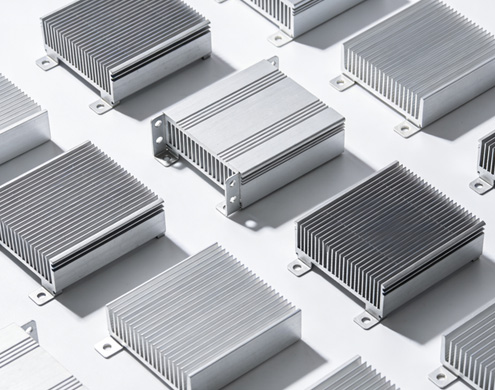
Modern electronics face a thermal paradox. To achieve greater speed and functionality, engineers pack more transistors into ever-smaller spaces. However, this dramatically increases power density—the amount of heat generated per unit area.
More Than a Metal Block: The Science of the Heat Sink
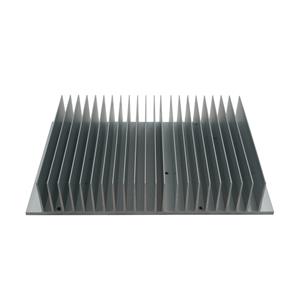
A heat sink is a passive thermal exchanger engineered to pull heat away from a critical component and dissipate it into the environment. Its effectiveness rests on three fundamental principles of heat transfer:
1. Conduction
Heat first moves from the hot component (like a CPU) into the base of the heat sink through direct contact. Materials with high thermal conductivity, primarily aluminum and copper, are essential here. The quality of this interface, often enhanced with thermal pastes or pads, is critical.
2. Convection
Once heat spreads through the heat sink, it is transferred to the surrounding air via its fins. The design maximizes surface area to facilitate this exchange. Cooling can be:
· Passive: Relies on natural air buoyancy (hot air rising).
· Active: Uses a fan or blower to force air across the fins, dramatically improving efficiency.
3. Radiation
A smaller but non-negligible amount of heat is emitted as infrared radiation. Surface treatments can optimize this effect, particularly in enclosed spaces.
The Future: Heat Sink Intelligent and Integrated Cooling
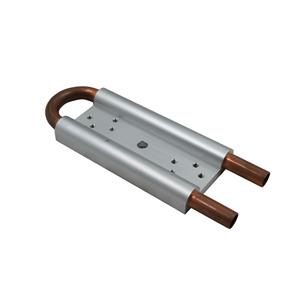
The future of thermal management lies in integration and intelligence. Heat sink will increasingly be co-designed with chips and system layouts from the outset. We will see wider use of embedded heat pipes and predictive thermal management, where sensors and algorithms dynamically adjust cooling in response to workload. Simulation tools now allow engineers to model and optimize a heat sink performance virtually long before a physical prototype is built, saving time and cost.
As long as electrons flow and resistance exists, heat will be generated. The heat sink, in its many evolving forms, will remain an indispensable guardian against that heat—a silent, steadfast enabler of the technological world we rely on every day. Investing in its design is not an engineering afterthought; it is a fundamental requirement for building the reliable, high-performance systems of tomorrow.
The future of heat sinks will go beyond their traditional role as a single physical component, evolving into intelligent, deeply integrated system-level solutions. Future heat dissipation systems will no longer operate "in the background", but will instead become an intelligent subsystem with the ability to sense, communicate, and make decisions.