


How to address the issue of insufficient hardness in aluminum materials produced by aluminum extrusion presses?
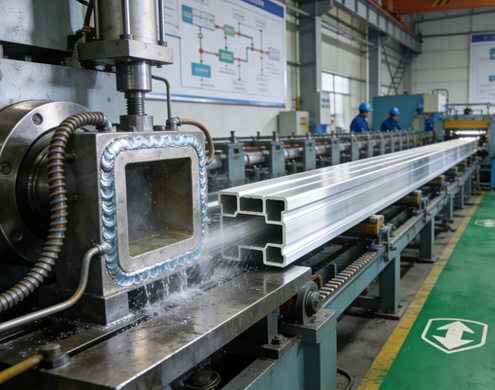
For aluminum extrusion manufacturers, maintaining consistent product hardness is always a critical and often challenging aspect of production. The hardness of aluminum profiles is a crucial indicator of their mechanical strength, durability, and suitability for use in construction, automotive, and aerospace industries. Insufficient hardness can lead to product failure, high return costs, and reputational damage. The root causes are often interconnected, stemming from the parameters of the aluminum extrusion press, the condition of the die, and the inherent properties of the aluminum alloy itself.
Key Factors and Feasible Solutions: The following is a detailed analysis of the main factors leading to low hardness in profiles produced by aluminum extrusion presses, along with evidence-based solutions.
1. Optimize Extrusion Temperature and Speed: Temperature during the extrusion process is a crucial factor. Precise, alloy-specific temperature control is essential. Studies show that for alloy 6061, an optimized aluminum extrusion process at approximately 500°C yields superior mechanical properties.
2. Importance of Die Condition and Maintenance: The die is the core component of the aluminum extrusion press. Strictly adhere to die maintenance and standardized operating procedures. Ensure the die meets the hardness standard of 47-52 HRC and possesses a high-quality nitrided surface layer. To extend service life and improve performance, consider using advanced materials such as hardened alloy compounds.
3. Employing Advanced Lubrication and Finishing Technologies: Use specialized lubricants containing fine ceramic particles (such as silica and alumina). Studies have shown that these particles embed into the billet surface during extrusion, resulting in a harder and smoother final product.
4. Post-extrusion heat treatment: Immediately after the profile is removed from the aluminum extrusion press, the quenching and annealing processes are integrated and strictly controlled. The quenching temperature must be appropriate; for alloy 6061, its properties will significantly degrade if the temperature is below 480°C.
In conclusion, addressing hardness issues in aluminum extrusion presses requires more than a single solution; a comprehensive understanding of the entire process is essential. This necessitates meticulous die handling, precise control of thermal and mechanical parameters, and the adoption of innovative surface treatment technologies. By viewing the extrusion press as part of an interconnected system—from billet to aged profile—manufacturers can transform quality control challenges into opportunities for process advantage and product excellence.