

Why are the Requirements for Solar Aluminum Frame So Stringent?
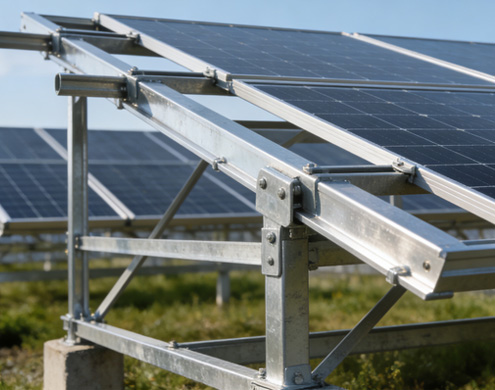
In the rapidly developing global solar energy industry, aluminum solar frame play a crucial role in ensuring the efficiency, durability, and safety of photovoltaic systems. While often considered a simple structural component, the aluminum solar frame faces extremely stringent requirements in its production and quality control.
1. Structural Integrity and Component Protection
The primary function of the aluminum solar frame is to provide robust mechanical support. Relevant standards clearly define the frame's mechanical strength, stiffness, and dimensional tolerances. The alloy composition (typically from the 6000 series) is carefully selected to optimize strength while maintaining good machinability for precise corner connections.
2. Corrosion Resistance, Extended Service Life
Photovoltaic devices are exposed to harsh weather conditions year-round. Corrosion of the aluminum solar frame weakens its structural strength. The frame requires complex surface treatments, most commonly anodizing or powder coating, to ensure decades of corrosion resistance. The choice of coating color (usually silver or black) must also meet stringent UV resistance standards to prevent fading.
3. Ensuring Electrical Safety and Grounding
The solar panel aluminum frame plays a crucial role in the electrical safety system. It acts as a grounding path, safely diverting any potential electrical faults or surges caused by lightning strikes to the earth. The conductivity and connection design of the solar panel aluminum frame are primary safety considerations.
4. Thermal Management and Efficiency
Solar aluminum frame facilitate passive thermal management. A well-designed frame helps maintain a lower operating temperature, directly supporting continuous energy output. Manufacturers optimize the frame profile to achieve this while also considering material usage.
5. Compatibility and Installation Efficiency
Modern solar aluminum frame must be designed to be compatible with a variety of installation systems. Their outlines, sealing grooves, and mounting hole positions are standardized to ensure universal and secure connections, thereby speeding up installation and reducing labor costs.
6. Sustainability and Environmental Impact
As the solar energy industry advocates for sustainable development, while the initial production of aluminum solar frame consumes a relatively high amount of energy, they are infinitely recyclable. Stringent requirements typically include the use of recycled materials and ensuring that the frames are easily recyclable after disposal, thus supporting the circular economy of photovoltaic products.