


Systematic Approach To Solving The hardness Problem In Aluminum Extrusion Presses.
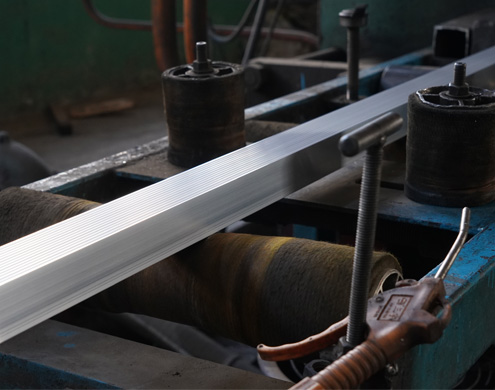
Addressing hardness issues in aluminum extruders requires a systematic approach.
The following action plan provides a step-by-step guide for diagnosing and resolving this problem. If the hardness of the profiles produced by the aluminum extrusion machine is insufficient, it indicates that there are potential problems in the production process chain, and immediate attention is required.
Step 1: Immediate Diagnosis
• Inspect the hardness of the working zone of the extrusion die. Its hardness should be at least 48 HRC.
• Inspect and calibrate the temperature sensors on the aluminum extruder used for the container, billet, and die.
Step 2: Process Parameter Review
• Compare your current aluminum extrusion speed and temperature with known optimized parameters for the specific alloy you are using.
• Review your post-extrusion quenching process to ensure it meets critical temperature requirements.
Step 3: Implement Corrective Actions
• For dies exhibiting wear or low hardness, prioritize renitriding or replacement with higher quality material.
• Pilot test a new lubrication system using ceramic additives on a single aluminum extrusion line to evaluate the hardness improvement.
• Adjust and record the optimized temperature-speed combination, then train operators on the new operating procedures.
Looking ahead, several trends are emerging in aluminum extrusion:
• AI-driven predictive systems: Machine learning algorithms analyze historical aluminum extruder operating data to predict and prevent deformation problems.
• Integrated quality assurance: Straightening systems with built-in laser measurement technology provide continuous feedback to the aluminum extruder control system, forming a closed-loop production system.
• Sustainable production methods: New straightening methods consume less energy and generate less material waste, contributing to the aluminum industry's sustainability goals.
The Future of Extrusion Technology: Smarter and Stronger The aluminum extrusion industry is moving towards smarter and more rigorous SPD (Strained Plastic Deformation) processes. The concept of low-temperature, high-speed extrusion is gaining traction as a method for refining grain structure and improving mechanical properties. Furthermore, advanced technologies like Accumulated Extrusion Bonding (AEB) demonstrate the potential to produce ultrafine-grained aluminum with significantly increased hardness. Next-generation aluminum extrusion technology will likely integrate real-time monitoring and adaptive control to continuously maintain these optimal conditions.